Home EV Charging: Do You Actually Need a Level 2 Charger?
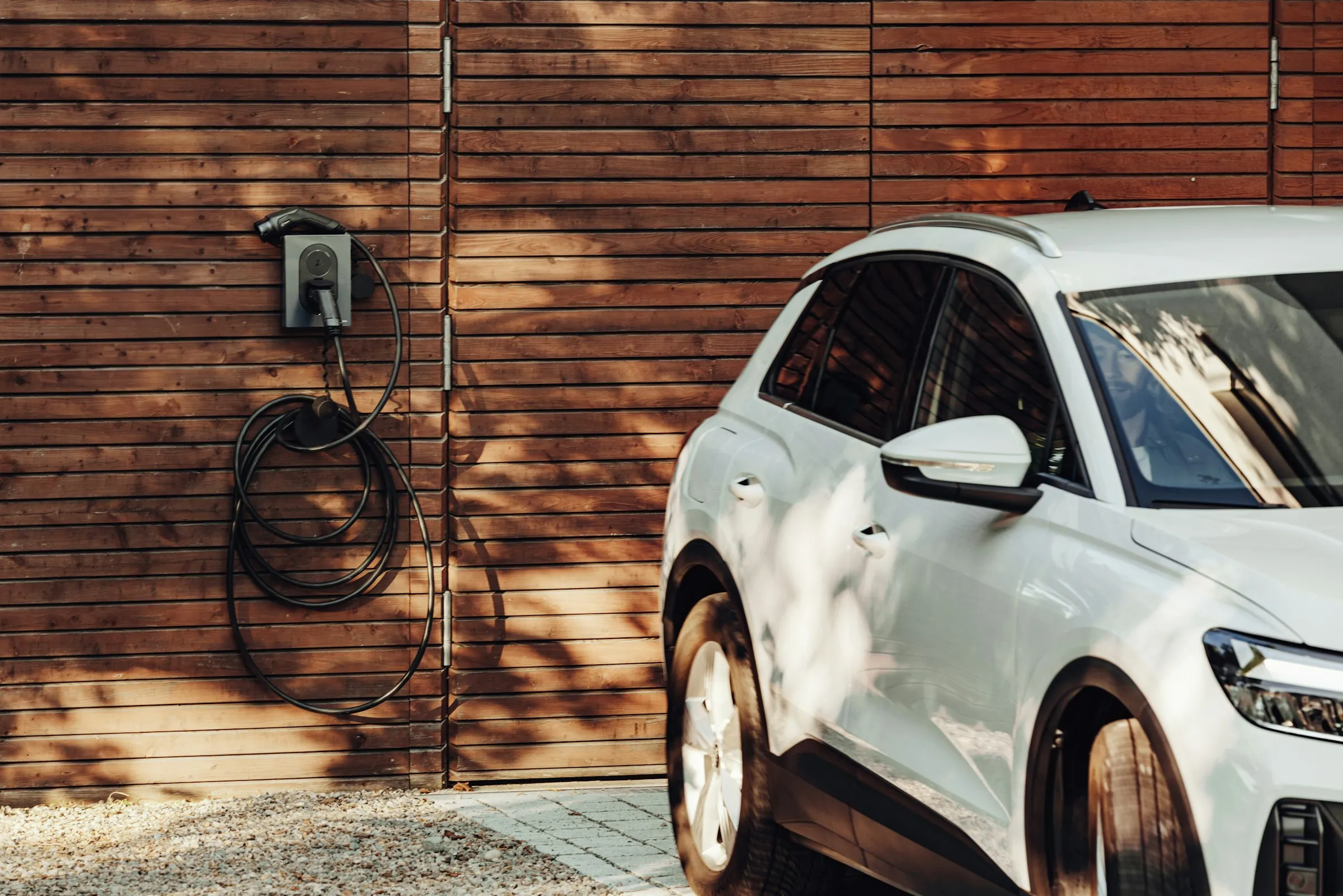
Most people don’t need one. A normal wall outlet covers an average day’s driving overnight, and a Level 2 charger only earns its cost in specific circumstances.
Here’s how to tell which group you’re in.
The overnight test
You aren’t trying to fill the battery. You’re replacing what you used today, before you leave tomorrow.
A normal 120-volt outlet (Level 1) adds about 4–5 miles of range an hour. A 240-volt charger (Level 2) adds about 25–38.
| Plugged in | Level 1 adds | Level 2 adds |
|---|---|---|
| 8 hours | ~35 miles | ~200+ miles |
| 12 hours | ~55 miles | ~300+ miles |
The average US driver covers 33–37 miles a day. If that sounds like you and the car sits at home overnight, Level 1 already covers it — nothing to buy, nothing to install.
When Level 2 is worth it
- You regularly drive more than ~50 miles a day
- The car is only home for a few hours between trips
- Your cheap overnight rate runs a short window, and the charge has to fit inside it
- Two EVs share one space
That third one catches people out. If your utility’s cheap rate runs midnight to 6am, Level 1 simply can’t move enough energy in six hours — and the charger pays for itself on rate savings, not convenience.
What it costs
The charger: roughly $300–$700. A 32A or 40A unit sits at the lower end. Paying more buys app features and cable length, not speed.
Installation: $300 to $2,000+. This depends almost entirely on the distance from your parking space to the electrical panel. If the panel needs upgrading, add $1,500–$4,000.
Ballpark ranges as of August 2026. They vary widely by region and by house — get two or three quotes before budgeting.
Check your panel first
Code treats car charging as a continuous load, so a charger may only use 80% of its breaker:
| Breaker | Charger draws | Roughly |
|---|---|---|
| 40A | 32A | ~26 mi/hour |
| 50A | 40A | ~32 mi/hour |
| 60A | 48A | ~38 mi/hour |
A 48A charger needs a 60A circuit. Find the main breaker at the top of your panel — 100, 150 or 200 amps. A 200A panel usually has room; a 100A panel in an older house often doesn’t.
For most homes, a 40A circuit feeding a 32A charger is the sweet spot. An electrician makes the final call, but knowing your panel size first tells you which conversation you’re having.
Then work out the running cost
The hardware is the one-off. What you spend every year is electricity, and that depends on your rate — not your charger.
Run the numbers in the EV charging cost calculator, starting with your real electricity rate.