How much does it cost to charge an Audi e-tron or Q8 e-tron?
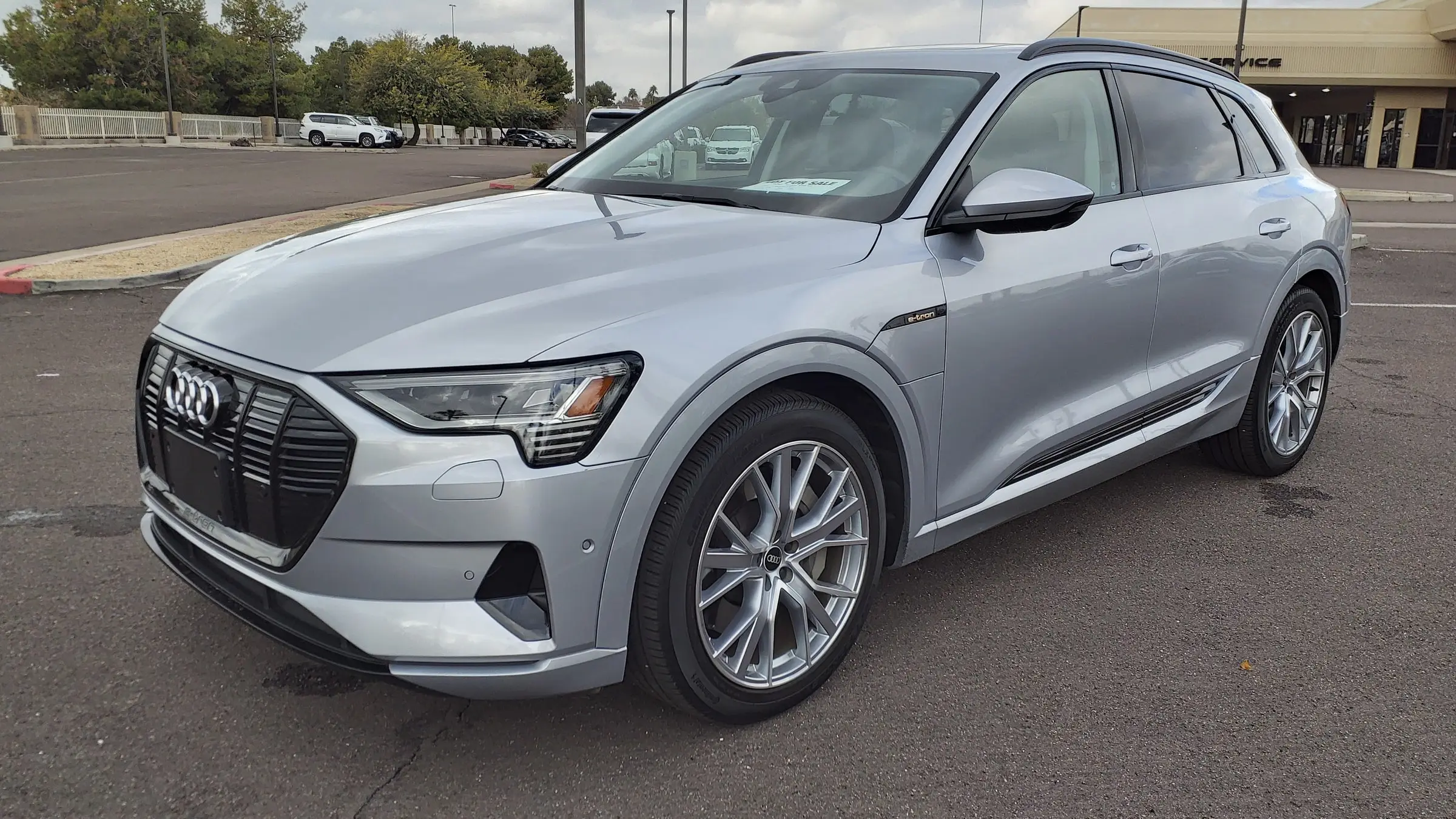
A full charge for a 2025 Audi Q8 e-tron quattro, 20-inch wheels costs about $21.05 at home, at the US average residential electricity rate of 18¢/kWh. A 2019–2023 Audi e-tron costs $16.89 to $17.49 to fill at the same rate, depending on version.
That full charge draws roughly 117 kWh from the wall and buys 272 miles of EPA-rated range — about $0.077 a mile. Filling up the 2025 Audi Q8 e-tron costs $14.44 in Idaho, the cheapest state, and $38.89 in California.
$21.05
to charge an Audi Q8 e-tron from empty at the US average electricity rate
Audi e-tron or Q8 e-tron charging cost calculator
Put in the rate from your electricity bill — the energy charge plus any delivery charge billed per kWh — and every figure below reprices to it. They start at the US average of 18¢/kWh and 12,000 miles a year.
- Per mile
- $0.077
- Per 100 miles
- $7.74
- Per month
- $77
- Per year
- $929
Per month and per year at 12,000 miles a year, spread evenly across twelve months.
One of the boxes above is empty or out of range.
What it costs to charge a 2019–2023 Audi e-tron
At the US average rate of 18¢/kWh, a full charge of a 2019–2023 Audi e-tron costs $16.89 to $17.49 depending on version, against $21.05 for the 2025 Audi Q8 e-tron above. Per 100 miles it runs $7.74 to $9.54, against $7.74.
Every e-tron fills for less than the 2025 Q8 e-tron, because each covers fewer miles on a charge, but none costs less per mile: the 2021–2023 SUV and the 2023 Sportback match its 43 kWh per 100 miles, and the 2019 SUV, at 46, uses about 7% more. The S models are where the running cost climbs, and wheel size decides most of it: 21- or 22-inch wheels add seven kWh per 100 miles to either body. fueleconomy.gov carries no 2020 record for the SUV body, only the Sportback, so a 2020 e-tron SUV has no row of its own here.
| Version | kWh/100mi | EPA range | Full charge | Per 100 miles | Per month |
|---|---|---|---|---|---|
| 2019 SUV | 46 | 204 mi | $16.89 | $8.28 | $83 |
| 2021–2022 SUV | 43 | 222 mi | $17.18 | $7.74 | $77 |
| 2023 SUV | 43 | 226 mi | $17.49 | $7.74 | $77 |
| 2020–2022 Sportback | 44 | 218 mi | $17.27 | $7.92 | $79 |
| 2023 Sportback | 43 | 225 mi | $17.42 | $7.74 | $77 |
| 2022–2023 S, 20-inch wheels | 46 | 208 mi | $17.22 | $8.28 | $83 |
| 2022–2023 S, 21- or 22-inch wheels | 53 | 181 mi | $17.27 | $9.54 | $95 |
| 2022–2023 S Sportback, 20-inch wheels | 45 | 212 mi | $17.17 | $8.10 | $81 |
| 2022–2023 S Sportback, 21- or 22-inch wheels | 52 | 185 mi | $17.32 | $9.36 | $94 |
What it costs at three real electricity rates
Your rate is the only input that really moves this number, so here is the same car at three real ones — the cheapest state, the national average, and the most expensive large mainland market.
| Electricity rate | Full charge | Per 100 miles | Per month | Per year at 12,000 mi |
|---|---|---|---|---|
| 12.35¢ · Idaho | $14.44 | $5.31 | $53 | $637 |
| 18¢ · US average | $21.05 | $7.74 | $77 | $929 |
| 33.25¢ · California | $38.89 | $14.30 | $143 | $1,716 |
What it costs per mile
An Audi Q8 e-tron costs about $0.077 a mile to charge at home at the US average electricity rate, or $7.74 per 100 miles. That is energy only — the EPA rates this car at 43 kWh per 100 miles measured at the wall socket, so charging losses are already inside the figure and should not be added again.
What it adds to your electricity bill
Charging an Audi Q8 e-tron at home adds about $77 a month to your electricity bill at the US average rate, driving 12,000 miles a year. That is the yearly cost of $929 spread evenly across twelve months — a month with a road trip in it costs more, and a quiet one costs less.
Nothing else on the bill changes: the car draws the same kilowatt-hours whatever else is running in the house, so the increase is the charging and nothing more.
Where the numbers come from
The EPA rates this quattro, 20-inch wheels at 43 kWh per 100 miles with 272 miles of combined range. Those two figures together give the energy for a full charge, which is where the 117 kWh above comes from.
We work it out that way rather than quoting a battery size on purpose. Manufacturers publish gross capacity, which includes a buffer at each end of the pack that never takes a charge, so a cost built on it overstates your bill. And the EPA measures at the wall socket rather than at the battery, so charging losses are already inside the figure — no need to add them, and adding them would count the same loss twice.
What this means for this car
Audi sold its first electric SUV as the e-tron for 2019 to 2023 and as the Q8 e-tron for 2024 and 2025, and fueleconomy.gov has no 2026 listing, so this page covers every model year of one car under two names: the 2025 Q8 e-tron in the headline and the e-tron in its own table. It is among the thirstiest SUVs on this site. The 2025 Q8 e-tron quattro on 20-inch wheels is rated 43 kWh per 100 miles, 72% more energy per mile than a Tesla Model Y and a little more than a Rivian R1S. The rename went with more range, not a lower bill per mile: a 2021–2023 e-tron is rated the same 43 kWh per 100 miles but covers 222 to 226 miles against 272, so the Q8 costs more to fill and about the same per mile. On 21-inch wheels the 2025 car is rated 46 with 254 miles, and the 2025 Sportback carries identical ratings to the SUV. The 2024 model year is the odd one: the Q8 e-tron SUV has a single EPA listing at 41 kWh per 100 miles and 285 miles, and the 2024 Sportback was rated 39 with 296. The performance SQ8 e-tron is the expensive end, rated 48 on 20-inch wheels and 56 on 21- or 22-inch wheels for 2025, the latter 30% more energy per mile than the car in this table.
How it compares
| Per 100 miles | Per year | |
|---|---|---|
| Audi Q8 e-tron | $7.74 | $929 |
| A mid-pack EV at 30 kWh/100mi | $5.40 | $648 |
| A 30 MPG gas car at $4.05/gal | $13.50 | $1,620 |
Common questions
How much does it cost to charge an Audi e-tron?
At the US average of about 18¢/kWh, a full charge covering the 2025 Q8 e-tron’s 272-mile EPA range costs roughly $21 at home. A 2019–2023 e-tron takes less energy to fill because it covers fewer miles on a charge; each version is priced in the e-tron table on this page.
Is the Q8 e-tron the same car as the e-tron?
Yes. Audi sold the updated e-tron SUV and Sportback as the Q8 e-tron from the 2024 model year. The EPA rates the 2025 Q8 e-tron on 20-inch wheels at 43 kWh per 100 miles, the same as a 2021–2023 e-tron, but with 272 miles of range against 222 to 226.
Do 21-inch wheels make the Q8 e-tron more expensive to run?
Yes. The 2025 Q8 e-tron is rated 43 kWh per 100 miles on 20-inch wheels and 46 on 21-inch, about 7% more energy per mile, and its range falls from 272 to 254 miles.