How much does it cost to charge a Chevy Bolt EV?
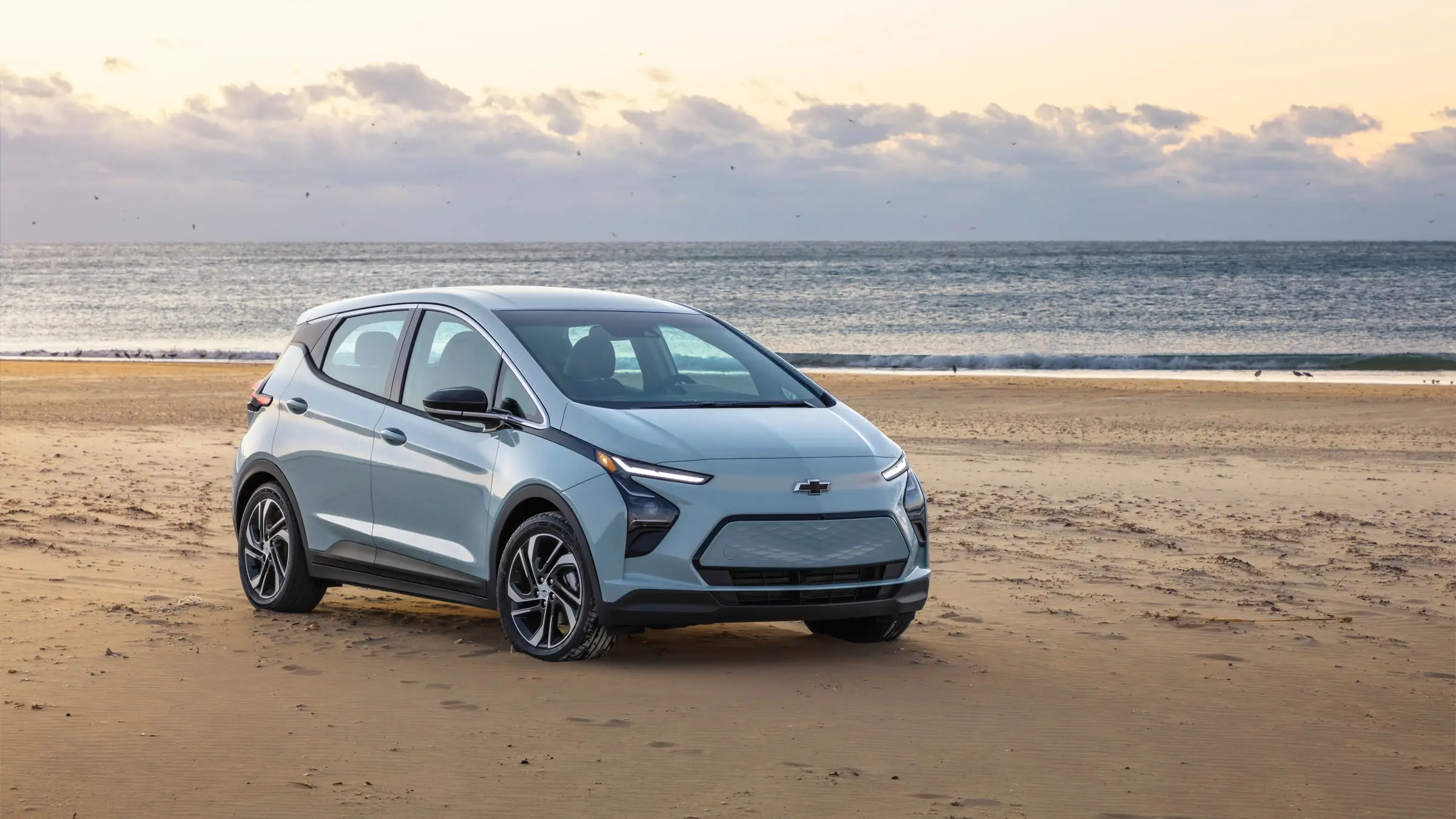
A full charge for a 2022–2023 Chevrolet Bolt EV 1LT costs about $13.05 at home, at the US average residential electricity rate of 18¢/kWh. Filling up the same car costs $8.96 in Idaho, the cheapest state, and $24.11 in California — your own rate decides it.
That full charge draws roughly 73 kWh from the wall and buys 259 miles of EPA-rated range — about $0.05 a mile.
$13.05
to charge a Chevrolet Bolt EV from empty at the US average electricity rate
Chevy Bolt EV charging cost calculator
Put in the rate from your electricity bill — the energy charge plus any delivery charge billed per kWh — and every figure below reprices to it. They start at the US average of 18¢/kWh and 12,000 miles a year.
- Per mile
- $0.05
- Per 100 miles
- $5.04
- Per month
- $50
- Per year
- $605
Per month and per year at 12,000 miles a year, spread evenly across twelve months.
One of the boxes above is empty or out of range.
What it costs at three real electricity rates
Your rate is the only input that really moves this number, so here is the same car at three real ones — the cheapest state, the national average, and the most expensive large mainland market.
| Electricity rate | Full charge | Per 100 miles | Per month | Per year at 12,000 mi |
|---|---|---|---|---|
| 12.35¢ · Idaho | $8.96 | $3.46 | $35 | $415 |
| 18¢ · US average | $13.05 | $5.04 | $50 | $605 |
| 33.25¢ · California | $24.11 | $9.31 | $93 | $1,117 |
What it costs per mile
A Chevrolet Bolt EV costs about $0.05 a mile to charge at home at the US average electricity rate, or $5.04 per 100 miles. That is energy only — the EPA rates this car at 28 kWh per 100 miles measured at the wall socket, so charging losses are already inside the figure and should not be added again.
What it adds to your electricity bill
Charging a Chevrolet Bolt EV at home adds about $50 a month to your electricity bill at the US average rate, driving 12,000 miles a year. That is the yearly cost of $605 spread evenly across twelve months — a month with a road trip in it costs more, and a quiet one costs less.
Nothing else on the bill changes: the car draws the same kilowatt-hours whatever else is running in the house, so the increase is the charging and nothing more.
Where the numbers come from
The EPA rates this 1LT at 28 kWh per 100 miles with 259 miles of combined range. Those two figures together give the energy for a full charge, which is where the 73 kWh above comes from.
We work it out that way rather than quoting a battery size on purpose. Manufacturers publish gross capacity, which includes a buffer at each end of the pack that never takes a charge, so a cost built on it overstates your bill. And the EPA measures at the wall socket rather than at the battery, so charging losses are already inside the figure — no need to add them, and adding them would count the same loss twice.
What this means for this car
The Bolt earns its page as a discontinued car: GM built the last one in December 2023, prices fell hard, and it settled in as the default used EV under $20,000. It is also one of the cheapest cars here to fill. At 28 kWh per 100 miles and 259 miles of range, a full charge draws about 73 kWh from the wall — less than any other car on this list except the short-range Fiat 500e. Model year matters more than trim: every trim shares one EPA rating, but 2020–2021 cars are rated 29 kWh per 100 miles, 2017–2019 hatchbacks cover 238 miles, and the roomier Bolt EUV is rated 29 with 247 miles of range. The famous weakness is DC fast charging, which peaks near 55 kW — barely a quarter of what a Kia EV6 draws — so a road-trip stop runs about an hour. For running costs that weakness points the right way: a car this slow at public chargers gets charged overnight at home, where electricity is cheapest, and GM even paid for a standard Level 2 home installation for many 2022–2023 buyers. On the used market, ask for the battery recall paperwork — GM replaced packs on a large share of 2017–2022 cars with new batteries carrying their own 8-year warranty, which can make the battery far younger than the model year.
How it compares
| Per 100 miles | Per year | |
|---|---|---|
| Chevrolet Bolt EV | $5.04 | $605 |
| A mid-pack EV at 30 kWh/100mi | $5.40 | $648 |
| A 30 MPG gas car at $4.05/gal | $13.50 | $1,620 |
Common questions
How much does it cost to fill up a Chevy Bolt EV?
At the US average residential rate of about 18¢/kWh, a full charge covering the EPA range of 259 miles costs around $13 at home — among the least energy drawn per fill of any car on this site. Your own electricity rate decides the real figure: the same fill is about $9 in Idaho and $24 in California.
Is the Bolt EUV more expensive to charge than the Bolt EV?
Slightly. The EUV is EPA-rated at 29 kWh per 100 miles against 28 for the 2022–2023 hatchback, and it covers 247 miles on a charge rather than 259 — a few percent more energy for every mile driven.
Is a used Bolt cheap to run if I road-trip a lot?
Less so. Its fast charging peaks near 55 kW, so highway stops are long, and DC fast charging usually costs more per kWh than charging at home. The Bolt is at its cheapest as a commuter charged overnight at home.