How much does it cost to charge a Hyundai Ioniq 5?
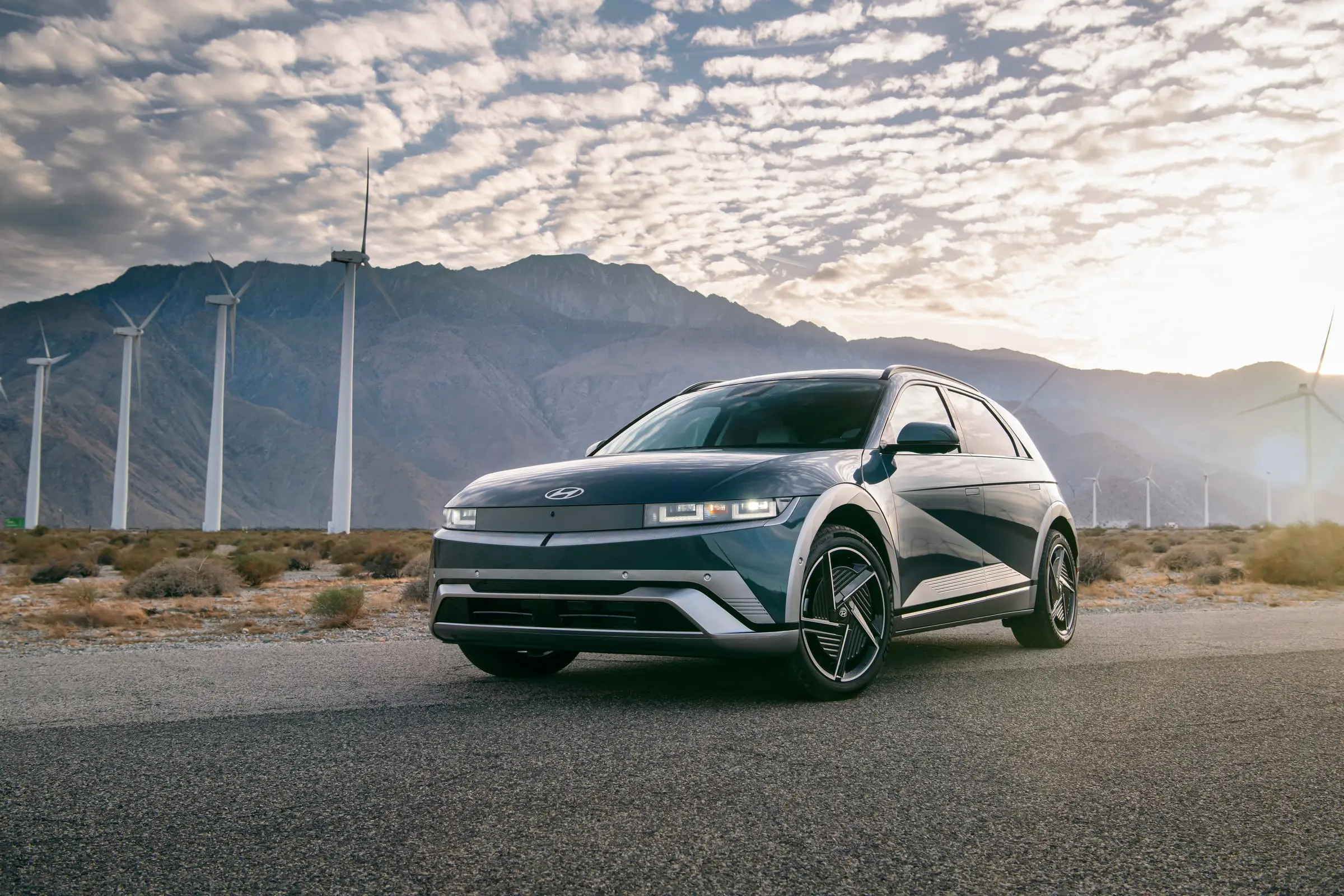
A full charge for a 2026 Hyundai Ioniq 5 RWD costs about $17.17 at home, at the US average residential electricity rate of 18¢/kWh. Filling up the same car costs $11.78 in Idaho, the cheapest state, and $31.72 in California — your own rate decides it.
That full charge draws roughly 95 kWh from the wall and buys 318 miles of EPA-rated range — about $0.054 a mile.
$17.17
to charge a Hyundai Ioniq 5 from empty at the US average electricity rate
Hyundai Ioniq 5 charging cost calculator
Put in the rate from your electricity bill — the energy charge plus any delivery charge billed per kWh — and every figure below reprices to it. They start at the US average of 18¢/kWh and 12,000 miles a year.
- Per mile
- $0.054
- Per 100 miles
- $5.40
- Per month
- $54
- Per year
- $648
Per month and per year at 12,000 miles a year, spread evenly across twelve months.
One of the boxes above is empty or out of range.
What it costs at three real electricity rates
Your rate is the only input that really moves this number, so here is the same car at three real ones — the cheapest state, the national average, and the most expensive large mainland market.
| Electricity rate | Full charge | Per 100 miles | Per month | Per year at 12,000 mi |
|---|---|---|---|---|
| 12.35¢ · Idaho | $11.78 | $3.71 | $37 | $445 |
| 18¢ · US average | $17.17 | $5.40 | $54 | $648 |
| 33.25¢ · California | $31.72 | $9.98 | $100 | $1,197 |
What it costs per mile
A Hyundai Ioniq 5 costs about $0.054 a mile to charge at home at the US average electricity rate, or $5.40 per 100 miles. That is energy only — the EPA rates this car at 30 kWh per 100 miles measured at the wall socket, so charging losses are already inside the figure and should not be added again.
What it adds to your electricity bill
Charging a Hyundai Ioniq 5 at home adds about $54 a month to your electricity bill at the US average rate, driving 12,000 miles a year. That is the yearly cost of $648 spread evenly across twelve months — a month with a road trip in it costs more, and a quiet one costs less.
Nothing else on the bill changes: the car draws the same kilowatt-hours whatever else is running in the house, so the increase is the charging and nothing more.
Where the numbers come from
The EPA rates this RWD at 30 kWh per 100 miles with 318 miles of combined range. Those two figures together give the energy for a full charge, which is where the 95 kWh above comes from.
We work it out that way rather than quoting a battery size on purpose. Manufacturers publish gross capacity, which includes a buffer at each end of the pack that never takes a charge, so a cost built on it overstates your bill. And the EPA measures at the wall socket rather than at the battery, so charging losses are already inside the figure — no need to add them, and adding them would count the same loss twice.
What this means for this car
There is a genuine oddity in the Ioniq 5 range: the Standard Range model is rated more efficient than this longer-range RWD, at 29 kWh per 100 miles against 30. It carries a smaller battery, so it goes less far on a charge — 245 miles against 318 — but each of those miles costs slightly less. Buying the bigger battery gets you range, not cheaper running. From there the spread widens quickly. All-wheel drive takes it to 32 kWh per 100 miles on 19-inch wheels and 34 on 20-inch, and the performance N version is rated at 43, which is 43% more energy per mile than this one. Wheel size alone moving the figure by two kWh per 100 miles is worth knowing before you pick a trim.
How it compares
| Per 100 miles | Per year | |
|---|---|---|
| Hyundai Ioniq 5 | $5.40 | $648 |
| A mid-pack EV at 30 kWh/100mi | $5.40 | $648 |
| A 30 MPG gas car at $4.05/gal | $13.50 | $1,620 |
Common questions
How much does it cost to charge a Hyundai Ioniq 5?
At the US average of about 18¢/kWh, a full charge covering its 318-mile EPA range costs roughly $17 at home.
Is the Standard Range Ioniq 5 cheaper to run?
Slightly, per mile. It is EPA-rated at 29 kWh per 100 miles against 30 for this longer-range RWD, though it covers 245 miles on a charge rather than 318.
How much do bigger wheels affect the cost?
On the all-wheel-drive Ioniq 5, moving from 19-inch to 20-inch wheels takes the EPA rating from 32 to 34 kWh per 100 miles — about 6% more energy for every mile.