Costs · September 14, 2026 · 8 min read
EV Cost per Mile vs Gas: Every Car, Every Rate
What an EV costs per mile against a gas car, for 34 cars at three electricity prices, and the rate at which gas becomes the cheaper fuel.
At the US average electricity rate, charging an EV at home costs about 5.9¢ a mile against 13.5¢ for a 30 mpg gas car, less than half as much for every mile you drive. Gas only wins where electricity costs more than about 41¢ per kWh, a price above every large mainland state’s average but below Hawaii’s.
5.9¢ vs 13.5¢
a mile: the average of the 34 EVs this site tracks, charged at home at the US average rate, against a 30 mpg gas car
That’s the average car at the average rate, which is the one comparison everybody already makes. The two numbers that decide yours are which car, and who sells you the electricity.
Every car, at three electricity prices
The gas car’s cost per mile doesn’t care where you live, near enough. The EV’s does. Here’s every car we track, at the average electricity rate in the cheapest state, the national average, and the most expensive large mainland market, with the gas car on top for reference. The last column is the rate at which that car stops being cheaper than gas. A figure in bold costs more than the gas car.
| Cost per mile | Idaho | US average | California | Gas wins above |
|---|---|---|---|---|
| Gas car, 30 mpg | 13.5¢ | 13.5¢ | 13.5¢ | – |
| Lucid Air | 2.8¢ | 4.1¢ | 7.6¢ | 59¢/kWh |
| Tesla Model 3 | 3.1¢ | 4.5¢ | 8.3¢ | 54¢/kWh |
| Tesla Model Y | 3.1¢ | 4.5¢ | 8.3¢ | 54¢/kWh |
| Hyundai Ioniq 6 | 3.2¢ | 4.7¢ | 8.6¢ | 52¢/kWh |
| Toyota bZ | 3.2¢ | 4.7¢ | 8.6¢ | 52¢/kWh |
| Lexus RZ | 3.3¢ | 4.9¢ | 9.0¢ | 50¢/kWh |
| Tesla Model S | 3.3¢ | 4.9¢ | 9.0¢ | 50¢/kWh |
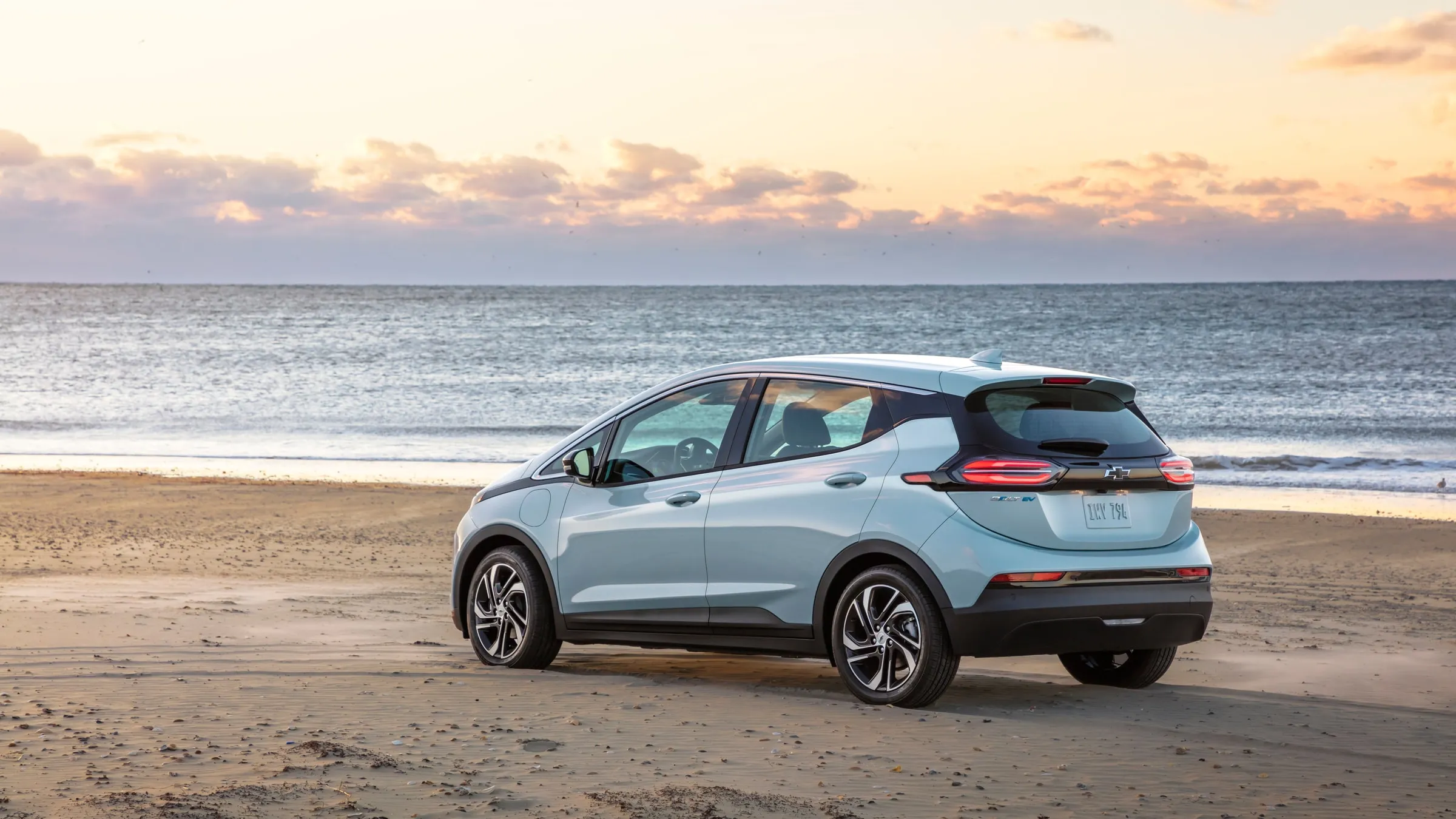
| Chevrolet Bolt EV | 3.5¢ | 5.0¢ | 9.3¢ | 48¢/kWh |
| Nissan Leaf | 3.5¢ | 5.0¢ | 9.3¢ | 48¢/kWh |
| Subaru Solterra | 3.5¢ | 5.0¢ | 9.3¢ | 48¢/kWh |
| Audi Q4 e-tron | 3.6¢ | 5.2¢ | 9.6¢ | 47¢/kWh |
| BMW i4 | 3.6¢ | 5.2¢ | 9.6¢ | 47¢/kWh |
| Fiat 500e | 3.6¢ | 5.2¢ | 9.6¢ | 47¢/kWh |
| Hyundai Kona Electric | 3.6¢ | 5.2¢ | 9.6¢ | 47¢/kWh |
| Hyundai Ioniq 5 | 3.7¢ | 5.4¢ | 10.0¢ | 45¢/kWh |
| Kia EV6 | 3.7¢ | 5.4¢ | 10.0¢ | 45¢/kWh |
| Kia Niro EV | 3.7¢ | 5.4¢ | 10.0¢ | 45¢/kWh |
| Polestar 2 | 3.7¢ | 5.4¢ | 10.0¢ | 45¢/kWh |
| Volkswagen ID.4 | 3.7¢ | 5.4¢ | 10.0¢ | 45¢/kWh |
| Chevrolet Equinox EV | 3.8¢ | 5.6¢ | 10.3¢ | 44¢/kWh |
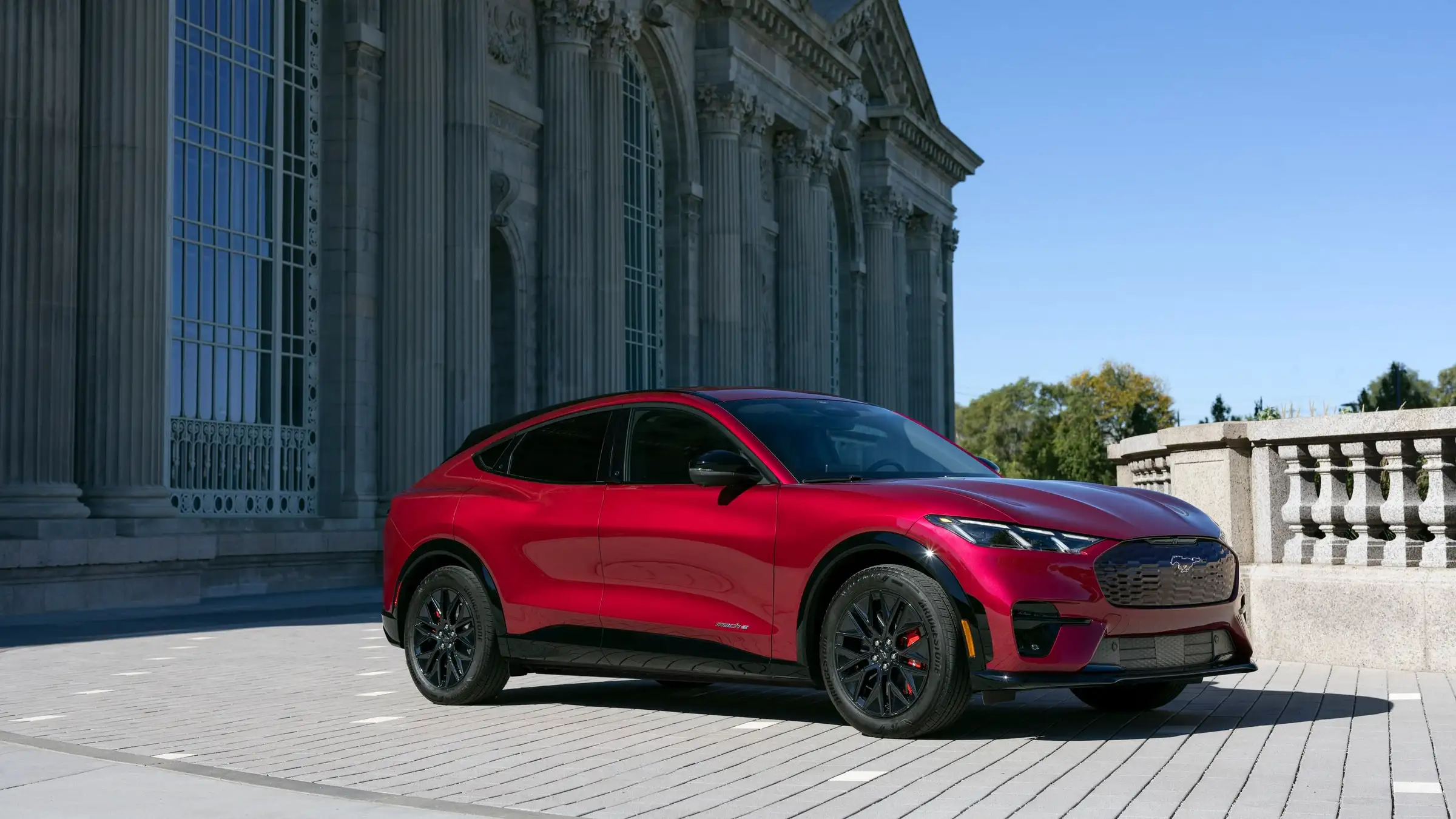
| Ford Mustang Mach-E | 3.8¢ | 5.6¢ | 10.3¢ | 44¢/kWh |
| Chevrolet Blazer EV | 4.0¢ | 5.8¢ | 10.6¢ | 42¢/kWh |
| Tesla Model X | 4.0¢ | 5.8¢ | 10.6¢ | 42¢/kWh |
| Honda Prologue | 4.1¢ | 5.9¢ | 11.0¢ | 41¢/kWh |
| Nissan Ariya | 4.2¢ | 6.1¢ | 11.3¢ | 40¢/kWh |
| BMW iX | 4.3¢ | 6.3¢ | 11.6¢ | 39¢/kWh |
| Cadillac Lyriq | 4.6¢ | 6.7¢ | 12.3¢ | 36¢/kWh |
| Porsche Taycan | 4.6¢ | 6.7¢ | 12.3¢ | 36¢/kWh |
| Kia EV9 | 4.7¢ | 6.8¢ | 12.6¢ | 36¢/kWh |
| Rivian R1S | 4.9¢ | 7.2¢ | 13.3¢ | 34¢/kWh |
| Audi Q8 e-tron | 5.3¢ | 7.7¢ | 14.3¢ | 31¢/kWh |
| Tesla Cybertruck | 5.3¢ | 7.7¢ | 14.3¢ | 31¢/kWh |
| Ford F-150 Lightning | 5.9¢ | 8.6¢ | 16.0¢ | 28¢/kWh |
| GMC Hummer EV | 7.9¢ | 11.5¢ | 21.3¢ | 21¢/kWh |
Down the first two columns, every car on the list beats the gas car, most of them comfortably. In California the gap closes, and for four it flips: the Audi Q8 e-tron, Tesla Cybertruck, Ford F-150 Lightning, and GMC Hummer EV cost more per mile to charge at home than a mid-size gas car costs to fill.
That’s the comparison at its harshest for them, though. The gas car here is our illustrative mid-size car, and a big SUV or a pickup is rarely shopped against one.
Rates come from the EIA Electric Power Monthly (table 5.6.A, May 2026), and each car’s figure is its EPA combined rating. Tap any car for its own page, which reprices it at whatever rate you type in.
The electricity price where gas wins
Every car has a break-even rate: the price per kWh at which a mile of electricity costs the same as a mile of gas. Below it the EV is cheaper. Above it, the gas car is.
For the average car we track, it sits above what any large mainland state charges on average, and below Hawaii. The more efficient the car, the higher the price it can absorb before gas catches up, which is why the column above runs from the most generous to the least.
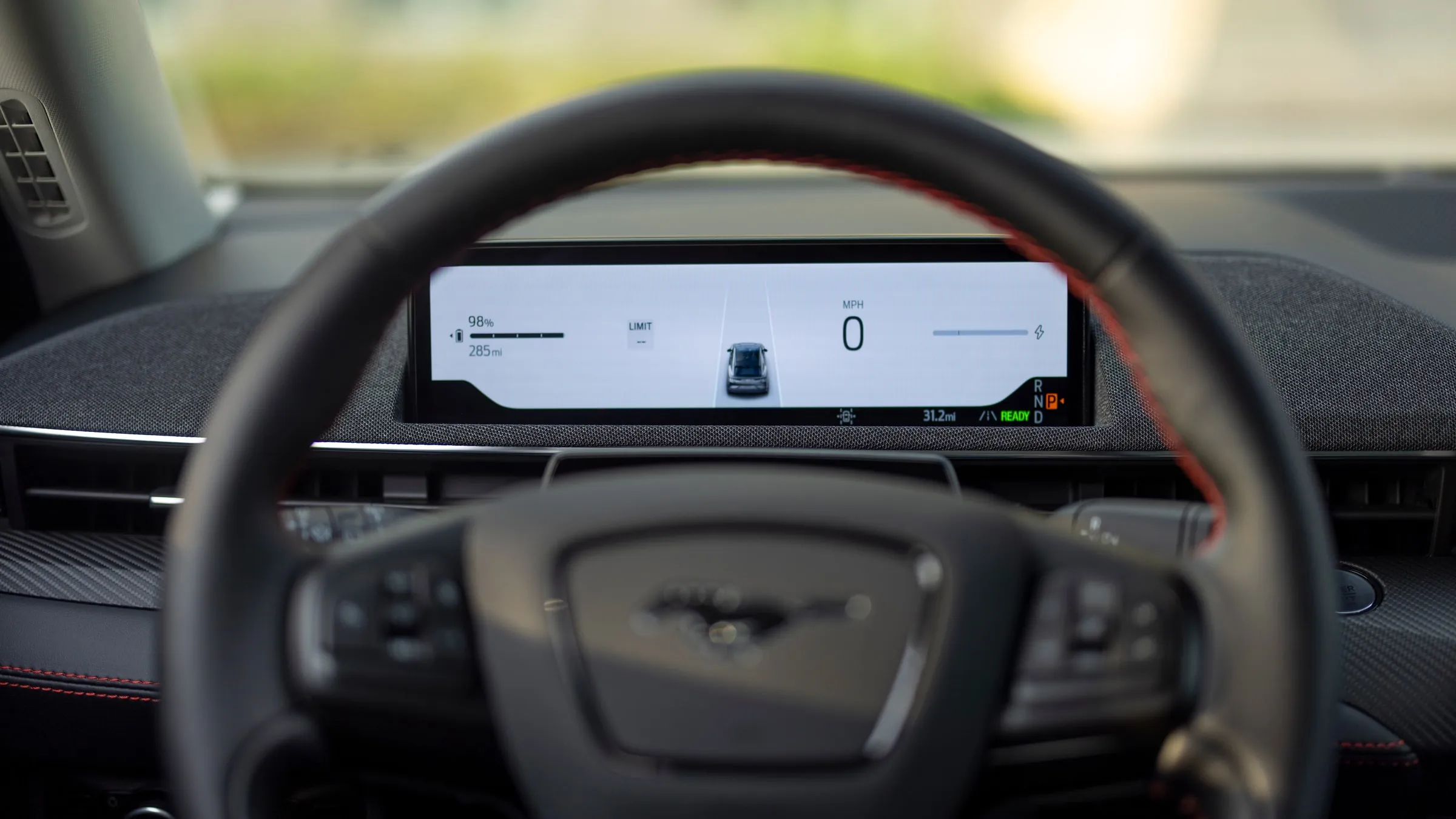
The same sum works in reverse for your own numbers. Divide your gas price by your gas car’s mpg, and you have its cost per mile. Divide that by the EV’s kWh per mile (its EPA kWh per 100 miles, divided by 100), and you have the electricity price at which the two cost the same. If your bill says less, the EV wins. The formula page walks through the EV half on a real car, and the calculator does the whole comparison once you type in your own mpg, gas price and rate.
Gas prices move too, of course. The comparison here uses the national average from the EIA weekly US regular retail gasoline price (week ending 17 August 2026). When gas climbs, every break-even rate climbs with it, and the EV’s lead widens.
Fast charging is where it flips
All of the above is home charging. Public fast charging is priced by each network, by station and often by hour, and there’s no national price series we can cite. So here’s one real station instead of a made-up average.
Electrek checked a Los Angeles Tesla Supercharger at peak in April 2026: $0.45/kWh for a Tesla or a paying member, $0.60/kWh for anyone else. At the member price, fewer than half the cars on the list still beat the gas car per mile, all of them from the efficient end. At the non-member price, not one does.
That’s one station at its busiest hour, not a typical price. But it’s the honest shape of the thing: an EV’s cost advantage lives mostly in your driveway, and a road trip on fast chargers can cost as much per mile as the gas car you didn’t buy.
What this comparison leaves out
It’s fuel only. No oil changes, no brake pads, no charger installation, no purchase price. Winter also raises the energy an EV uses for every mile, so cold months cost more than the table shows.
If what you want is the monthly figure rather than the per-mile one, how much an EV adds to your electric bill prices that at the same three rates. For everything else on running costs, see the costs topic.
Common questions
Is an EV cheaper per mile than gas?
At the US average electricity rate, yes, for every car this site tracks. Charged at home, the average one costs about 5.9¢ a mile, less than half what a 30 mpg gas car costs at the national average gas price.
At what electricity price does gas become cheaper than an EV?
For the average EV this site tracks, at about 41¢ per kWh, against a 30 mpg car at the national average gas price. That is above every large mainland state's average rate, but below Hawaii's. An efficient car holds out to a higher price, a heavy truck gives up at a lower one.
Is an EV cheaper per mile than gas in California?
For most cars, yes. At California's average electricity rate, the Audi Q8 e-tron, Tesla Cybertruck, Ford F-150 Lightning and GMC Hummer EV cost more per mile than a 30 mpg gas car; every other car this site tracks still costs less.
Is fast charging cheaper than gas per mile?
Often not. At the price a non-Tesla EV paid without a membership at a Los Angeles Supercharger at peak, as Electrek reported in April 2026, no car this site tracks beats a 30 mpg gas car per mile. Networks price by station and hour, so use the price on the screen.
How do I compare my own EV with a gas car?
For the gas car, divide the price of a gallon by its mpg. For the EV, multiply its EPA kWh per 100 miles by your electricity rate in dollars per kWh, then divide by 100. Both answers are dollars per mile, and the smaller one wins.